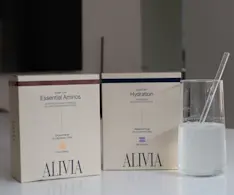
Meet Perydays: The Wellness Brand Made for Women, Designed by Women

Sadaf Razi is Adore Beauty's Senior Beauty Editor.
She's a former fashion editor (who worked at various glossy mags) and stylist-turned digital beauty and lifestyle writer. She has been in the lifestyle/media industry for over 10 years and her work has also been featured on international covers like Elle France and Vanity Fair Mexico.
Some of her fave Adore Beauty products include Cicaplast B5, CeraVe Cleansing Oil and Lancôme Renergie Triple Serum.

“The next generation in female and and family supplementation”, Australian-owned wellness brand Perydays has just dropped at Adore Beauty!
Whether it’s pre- and probiotics or a needed immune boost, Perydays has you covered.
To take us through the range, we turned to Naturopath & Nutritionist, Natasha Sidoti, (BHScNAT) below.
What is Perydays?
Perdays is a wellness brand created for women, by women, with a deep understanding of how nutritional needs evolve through every life stage. From fertility and pregnancy to postpartum and menopause, Perdays is here to empower you with targeted support that adapts to your body’s natural rhythms and transitions.
Perdays delivers high-quality supplements that are easy to take, easy to understand, and genuinely effective. Whether you're nurturing gut health, preparing for motherhood, or seeking balance through hormonal shifts, Perdays helps you take control of your health—on your terms.
The microbiome has become one of the biggest topics and buzzwords in wellness over the past few years. For readers who are still unfamiliar with the concept, can you explain what the microbiome actually is and why maintaining a balanced microbiome is so important for overall and hormonal health?
Natasha: “Microbiome” has become a bit of a wellness buzzword—but beneath the hype is a fascinating, pulsating and ever dynamic ecosystem.
This beautiful system acts like an interface (that never sleeps) between our body and our environment, an essential partner in our health and life itself.
Our microbiome underpins everything from digestion, to hormones and skin health.
Composed of trillions of microorganisms (bacteria, fungi, viruses) living in and on the body—primarily in the gut, but also across our skin, mouth, eyes and vaginal tract.
Intestinal colonisation begins whilst in our Mother’s womb (it was previously thought of as a sterile environment!)
Most change to our gut microbiome occurs in the first three years of life (especially from birth to 6 months), setting the stage for training the immune system towards appropriate responses to foreign/new substances, infections and toxins.
Every time we feed ourselves, we are also training our immune system (for better or for worse).
However, nothing is set in stone, it can be changed – it is a dynamic state we can influence our entire lives.
A balanced microbiome helps to:
- Regulate digestion and nutrient absorption
- Support immune function (over 70% of the immune system is gut-associated)
- Produce key compounds like short-chain fatty acids (important for inflammation and gut integrity)
- Influence mood via the gut–brain axis
- Support hormone metabolism—particularly oestrogen clearance via the “estrobolome”
When the microbiome is disrupted (through stress, antibiotics, poor diet, alcohol, or environmental exposures), we can see downstream effects such as:
- Bloating, constipation, food intolerances
- Brain fog, anxiety, depression
- Skin flare-ups (acne, eczema, rosacea)
- Recurrent infections
- Hormonal imbalances (PMS, heavy periods, oestrogen dominance patterns, PCOS)
- Increased infections (weaker immune system)
We hear a lot about prebiotics and probiotics when discussing gut health. How do these two work together to support the microbiome, and what role can they play specifically in supporting women’s health and hormonal balance?
Natasha: They are an impressive synergistic duo with different roles. Think of probiotics as the seeds, and prebiotics as the soil and fertiliser.
- Probiotics are the beneficial bacteria themselves
- Prebiotics are the fibres that feed those bacteria
Without adequate prebiotic intake (primarily via food and quality supplements), the microbiome will dwindle and become imbalanced – an invitation for inflammation and disease.
For women, a thriving microbiome can:
- Improve oestrogen metabolism (reducing recirculation of excess hormones which means much more easeful periods and moods beforehand)
- Support regular bowel movements, a must-have for daily hormone clearance (so they don’t double dip!)
- Influence insulin sensitivity, which plays a role in PCOS, healthy metabolism and blood sugar balance (cravings and energy crashes).
- Feed the vaginal microbiome (gut + vaginal microbiome talk to each other), dominated by protective Lactobacillus species (maintaining a healthy vaginal pH )
Prebiotic fibres (fructo-oligosaccharides/FOS like asparagus, bananas, root vegetables, garlic, leeks, oats, onions, rye, tomatoes, fermented foods) help us produce short-chain fatty acids (SCFA), regulating inflammation and strengthening a healthy gut lining (which also means healthier skin).
Breastmilk is the most potent ‘prebiotic’ we have, containing human milk oligosaccharides (HOS). Feeding the Bifidobacterium species in the infant gut, associated with overall health.
Not all probiotics are created equal. Are there particular probiotic strains that are known to support specific concerns such as digestive health, immunity, vaginal health or skin and how important is strain specificity when choosing a supplement?
Natasha: Like so many things, there is a huge range in quality of probiotic supplements available and it can be very confusing. Health effects are strain-specific—meaning different strains have different actions on our body.
It is good to see the full strain and number on your probiotic container, so you can search it up online to see if any research is connected to it. Many retail products do not share this level of detail.
Lactobacillus rhamnosus (CA-15 strain), is an excellent choice for women’s vaginal health. It has been isolated from healthy vaginal flora and tested to survive digestion (some probiotics don’t survive stomach acid) and colonise the vaginal environment via oral dosing.
L. rhamnosus (as well as L. gasseri SP33, L. reuteri HR7, L plantarum N13) are known to support the urogenital tract, helping maintain a healthy vaginal microbiome and reduce imbalances (bacterial vaginitis, vaginal thrush, UTIs, vaginal dryness).
Well studied strains for our digestion include; Lactobacillus rhamnosus GG , Saccharomyces Boulardii (also a great choice for skin health), Lactobacillus Plantarum 299V (excellent for IBS), Lactobacillus paracasei LPC-33/37, Lactobacillus Fermentum ME-3 (shown to improve cholesterol) and Bifidobacterium breve M-16V (general gut & IBD health.
Pregnancy can significantly influence the microbiome. Can pre- and probiotic supplements play a supportive role during pregnancy, and are there particular benefits or precautions women should be aware of?
Natasha: (Research suggests probiotic and prebiotic supplements are generally considered safe during pregnancy, though guidance from a healthcare professional is recommended.)
I now consider a researched based probiotic formula as part of standard prenatal and postnatal care for my clients.
Once they understand the profound connection between a mother’s gut health and their baby’s health – they are very dedicated at supporting themselves this way.
Pregnancy is one of the most significant windows of change for the microbiome and it must be supported.
We see shifts not just hormonally, but across the gut, vaginal, and immune ecosystems.
The maternal microbiome helps influence:
- Immune programming of the baby (setting the scene)
- Risk of eczema and allergies
- Metabolic health
- Initial gut colonisation at birth
Quality Probiotics & Prebiotics Can:
- Support digestive comfort (constipation, bloating)
- Help maintain a healthy vaginal microbiome, which may reduce risk of infections
- Support a healthy immune system
- Reduce risk of gestational diabetes
- Supporting infant outcomes, including reduced risk of eczema
From a clinical perspective, I tend to take a “gentle and targeted” approach in pregnancy:
- Focus on specific, well-researched strains rather than high-dose or overly complex formulas
- Prioritise tolerance and consistency over intensity
- Support with food-based prebiotics where possible (depending on food aversions at the time!)
A few important considerations:
- Always choose quality-controlled, clinically validated strains
- Avoid aggressive gut protocols during pregnancy (keep it simple and consistent)
- Individualise based on symptoms, history, and tolerance
- Seek guidance if there is a history of immune compromise or high-risk pregnancy
This is not the time for extremes—it’s about supporting, not overcorrecting.
Below, Natasha lists the Perydays’ hero products and who are they best suited to:
Perdays Probiotic 360° & Vitamin D, $55
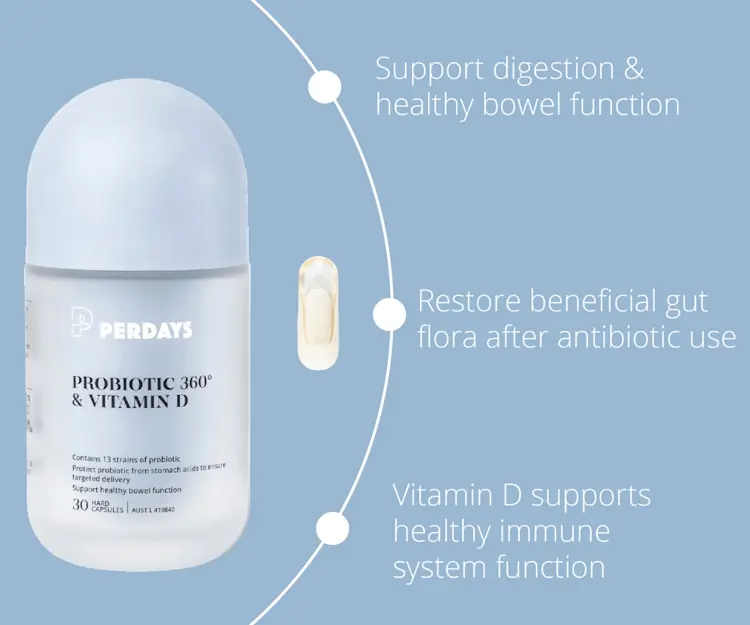
Suited to: Digestive support for all stages of life)
Fast facts:
- 9bn CFU Lactobacillus La-14, 6bn CFU Lactobacillus HN001, 1.1bn CFU blend of 11 additional probiotic strains and prebiotic FOS work together to support digestion and healthy bowel function.
- Restores beneficial gut flora after antibiotic use.
- Vitamin D3 works to support healthy immune system function.
- Supports maternal health where dietary intake is inadequate.
Perdays Breastfeeding Probiotic & Vitamin D, $75
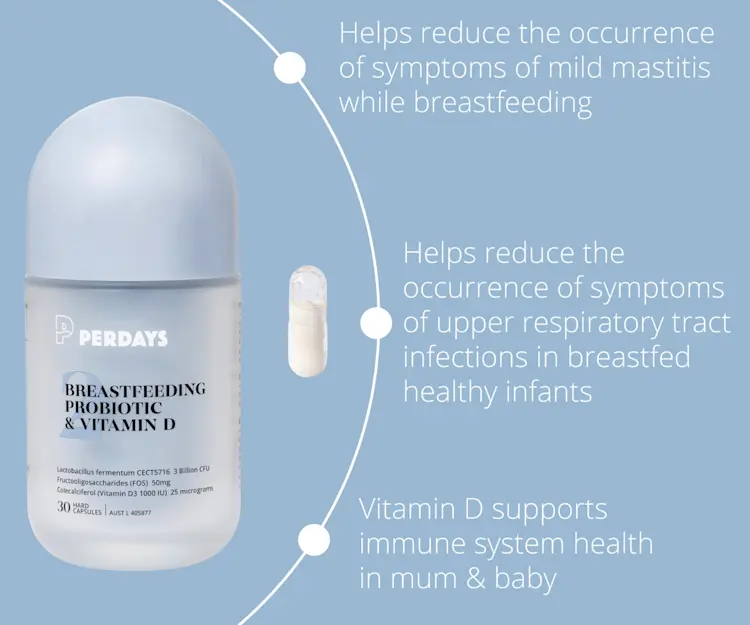
Suited to: Pregnancy + Breastfeeding.
Up to 33% of BF women will experience mastitis and almost 1/3 experience recurrence.
Most episodes occur in the first 6-8 weeks postpartum. Antibiotics have limited success due to increasing resistance and will negatively impact helpful microbiota (gut bugs we want to stick around).
Perydays Prebiotic Fibre, $27
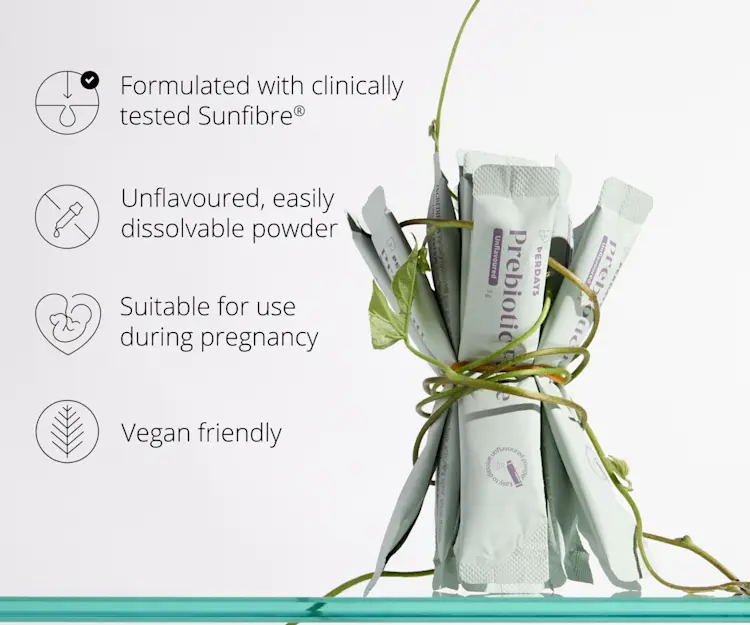
Suited to: Everyone can benefit from.
Researched partially hydrolysed guar gum – a gentle prebiotic that is low FODMAP (good for sensitive tummies), combined with psyllium husks and chia seeds.
This pairs well with probiotics (synergistic), helps with regular bowel movements and feeling fuller (more satisfied) after meals.
Perdays HERbiotic & Vitamin D, $55
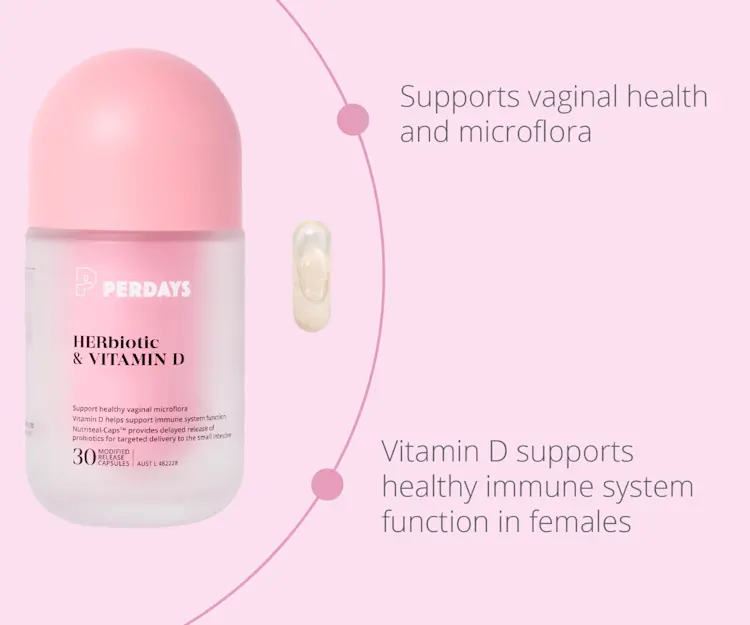
Suited to: (all women) – supporting healthy vaginal microbiome.
Vaginal microbiome vs gut microbiome: The gut and vaginal microbiomes differ in their microflora makeup.
Our Gut microbiome consists of a vast community of trillions of different microorganisms including good and bad bacteria, but the vaginal microbiome is largely dominated by Lactobacillus species bacteria. These bacteria produce lactic acid and help to maintain vaginal health.
- 10bn CFU Lactobacillus rhamonsus (CA-15) supports vaginal health and microflora.
- Vitamin D3 supports healthy immune system function in females.
Natasha's References:
- Koren O et al. Host remodeling of the gut microbiome and metabolic changes during pregnancy. Cell. 2012.https://pubmed.ncbi.nlm.nih.gov/22863002/
- Pelzer E et al. Maternal health and the placental microbiome. Placenta. 2017.https://pubmed.ncbi.nlm.nih.gov/28034467/
- Wickens K et al. Probiotics in pregnancy reduce eczema risk. J Allergy Clin Immunol. 2008.https://pubmed.ncbi.nlm.nih.gov/18234310/
- Lindsay KL et al. Probiotics in pregnancy and gestational diabetes. Diabetes Care. 2015.https://pubmed.ncbi.nlm.nih.gov/25414152/
- World Gastroenterology Organisation. Probiotics and Prebiotics Guidelines.https://www.worldgastroenterology.org/guidelines/global-guidelines/probiotics-and-prebiotics