What Is TikTok’s Contrast Makeup Theory, and Does It Actually Work?
Jas is the former Senior Content Specialist at Adore Beauty. A beauty admirer turned certified addict, she brings a sharp editorial eye and pop-culture pulse to everything she creates. Her words have appeared in The Age, Sydney Morning Herald, and Broadsheet. When she’s not producing viral content or podcasting about skincare, you’ll find her thrifting for vintage treasures or binging Bravo (strictly for research, of course).
TikTok’s Contrast Makeup Theory, popularised by French makeup artist Aliénor, helps you work out if you’re low, medium or high contrast and points you to bolder or softer makeup choices. I tested the filter, checked the visual psychology behind it and compared medium versus high-contrast looks using real products so you can decide how strictly to follow it.
Top Insights From This Guide
- Use the TikTok filter to label yourself low, medium or high contrast before swapping staple shades
- High contrast: pick sharp eyeliner and richer lip colours to make eyes and lips pop
- Low contrast: choose closely matched soft shades and seamless blends for a harmonious finish
- Do a side-by-side or half-face trial to see which contrast edits work for daytime and event looks
Have you ever thought about the contrast of your face?
No? Me neither—until TikTok served me the “Contrast Makeup Theory” on my FYP.
The concept, popularised by French makeup artist @Alieenor, helps to find harmonious makeup styles and colours by analysing the contrast between your hair, skin, and eyes.
@alieenor My favourite glow up tip is playing with contrast to get more confidence ✨ #contrastlevel #mediumcontrast #highcontrast #emmawatson ♬ son original - Alieenor 🧡
Think of it like a GPS for your face, helping you navigate Beauty with your features front of mind.
Of course, like most #BeautyTok trends, the core idea isn’t new— makeup artists (and photographers) have been playing with contrast for decades. But TikTok creator Aliénor took it a step further with a digital black-and-white filter designed to help us mere mortals pinpoint our contrast level like a pro.
Not on my algorithm? (It’s probably for the best, unless you love cats and the Real Housewives.)
Here’s the gist: the TikTok filter shows three skin tones, each with three contrast levels—low, medium, and high. It’s basically a side-by-side shadow, brightness, and colour comparison to help you figure out what complements your natural contrast.
As someone who has done every “What kind of bread are you?” quiz the internet has to offer (sourdough, btw), I wasn’t about to pass up the opportunity to learn something new.
But does it work IRL? And can it really transform the way you do your makeup?
I gave it a whirl, dove into the science (yes, there’s science), and shared my verdict below.
What Is Contrast Makeup Theory & How Does It Work?
At its core, the Contrast Makeup Theory is about balance.
It draws from the world of art and design, where contrast is a key principle in creating visually pleasing compositions.
But instead of painting a canvas, you’re working with your face—the most beautiful work of art there is. Aww.
The theory categorises people into three contrast levels:
- Low Contrast: Light hair, light eyes, and fair skin—features that naturally blend softly.
- Medium Contrast: Moderate differences in tone, like warm brown hair, hazel eyes, and olive skin.
- High Contrast: Striking distinctions between features, such as dark hair, fair skin, and bright blue eyes.
With that in mind, let's see it in action on one of my favourite beauty creators @stxph.h.
@stxph.h the way tik tok trends are constantly making me question my makeup routine LOL #contrastmakeup #highcontrastmakeup #lowcontrastmakeup #mediumcontrastmakeup ♬ WAP WAP WAP - models
The idea is that your makeup should echo your natural contrast.
High-contrast individuals might rock bold red lips and sharp eyeliner, while low-contrast folks often shine with softer, more seamless shades.
The Science (and Pseudoscience) Behind Contrast Theory.
Why does contrast matter? It’s all about how we perceive faces.
Studies in visual psychology show that contrast plays a significant role in how we identify and find balance in facial features.
Our brains are wired to seek out patterns that feel cohesive and harmonious, and contrast helps us do just that.
That said, TikTok trends have a knack for oversimplifying things. This theory isn’t a one-size-fits-all rulebook—it’s a guide.
It’s meant to help you connect the dots between your contrast level and makeup that might enhance it.
But as always, you do you, boo.
Putting TikTok’s Contrast Theory to the Test.
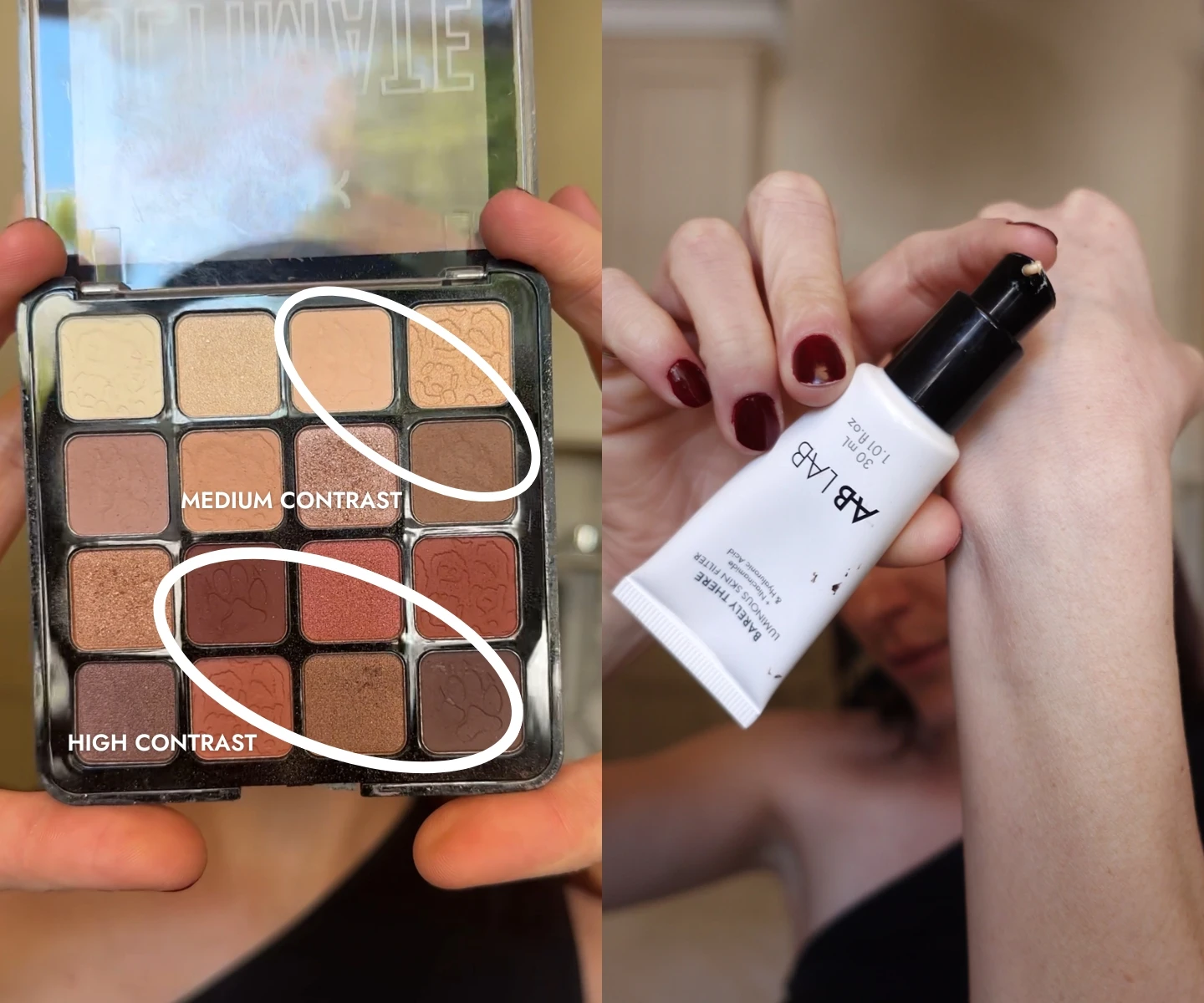
Armed with curiosity and my snazzy new digital camera until it decided to die about 15 minutes in (you'll see what I mean in the video below), I tried the contrast filter to uncover my true contrast level.
Having fair skin and predominantly dark features, I assumed I’d fall under High Contrast. Then again, my natural mousy brown hair made me wonder if I leaned more Medium. Hmm.
I decided to split the odds and test both looks side by side. (Who does she think she is?)
For the record, I’ve never done this half-half-makeup thing… Alas, here’s a visual of how it went...
Both looks share the same base:
- Painted with the Bobbi Brown Weightless Skin Foundation in shade NW022 mixed with a hint of elf Cosmetics Halo Glow Liquid Filter for luminosity
- Concealed with a blend of MAKE UP FOR EVER HD Skin Concealer and Huda Beauty #Fauxfilter Luminous Matte Liquid Concealer
- And lightly set with the MAKE UP FOR EVER Ultra HD Loose Translucent Powder - 8.5g
From there, things got… experimental.
I used some of the same products for both looks, albeit in different shades: the NYX Professional Makeup Ultimate Shadow Palette - Warm Neutrals and MAKE UP FOR EVER HD Skin Face Essentials Palette H1
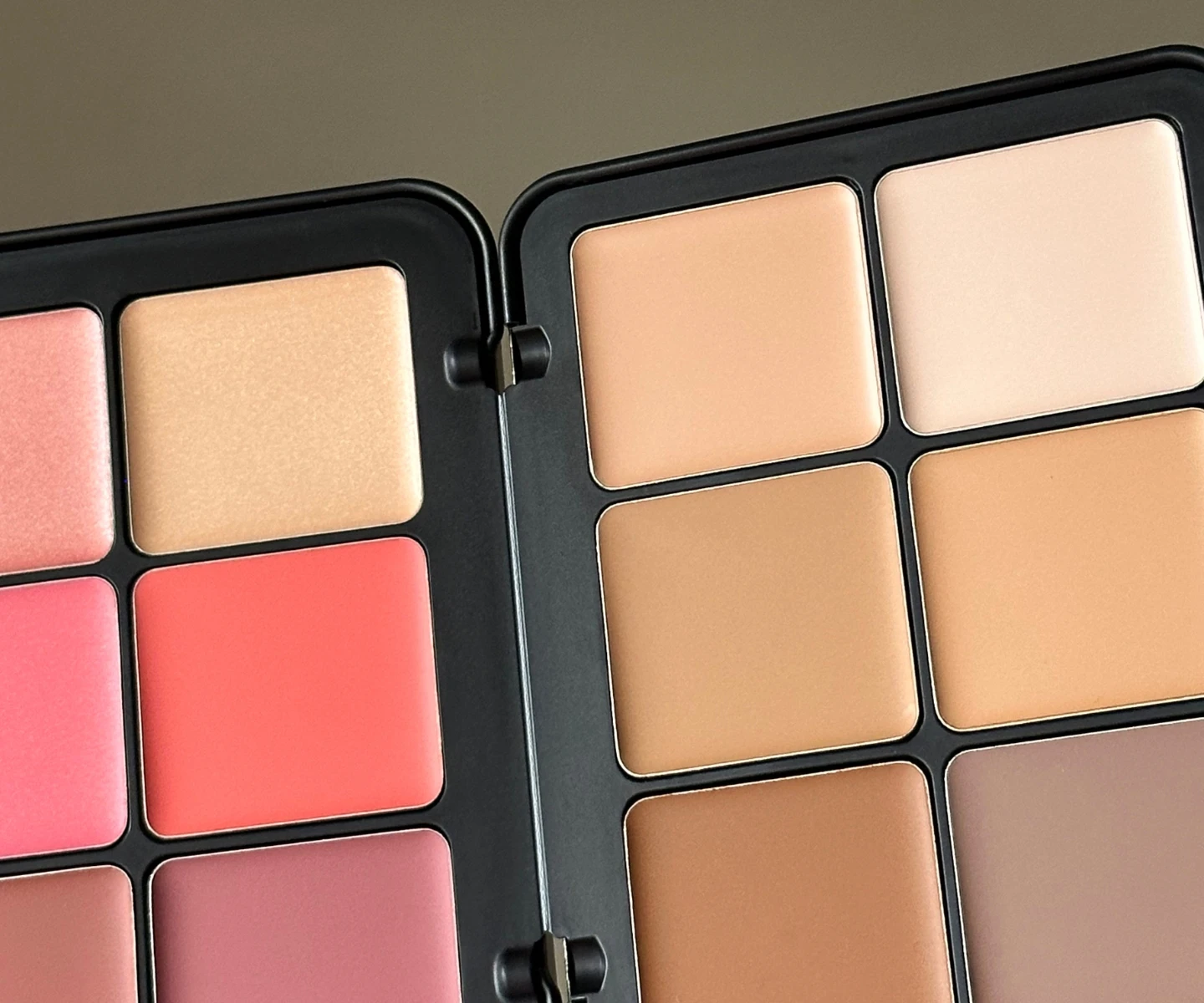
For my High-Contrast look, I opted for rich, dramatic tones: dark brown, burgundy and black.
I chose a deep berry blush for my High-Contrast cheeks (Giorgio Armani Luminous Silk Cheek Tint in Intense Berry) but went lighter on the application to keep the focus at eye level.
Whereas my Medium-Contrast makeup featured golden blends of taupe and peach.
The Anastasia Beverly Hills Blurring Serum Blush in Hibiscus for a softer finish, paired with the Benefit Hoola Lite across my eyes, cheeks, and contour.
As for my lips, I opted to keep things minimal:
- Lined with my forever fave MAKE UP FOR EVER Artist Color Pencil in Endless Cacao
- Paired with the M.A.C Cosmetics Macximal Silky Matte Lipstick in Velvet Teddy
- And topped with the Laneige Lip Glowy Balm 10g in Berry
And for my High-Contrast lip,
- A Bobbi Brown lipstick I've since discovered is discontinued, sorry friends!
- And my beloved Ole Henriksen Pout Preserve Lip Treatment Creme Brulee
Still with me? Now, onto the results.
The Results.
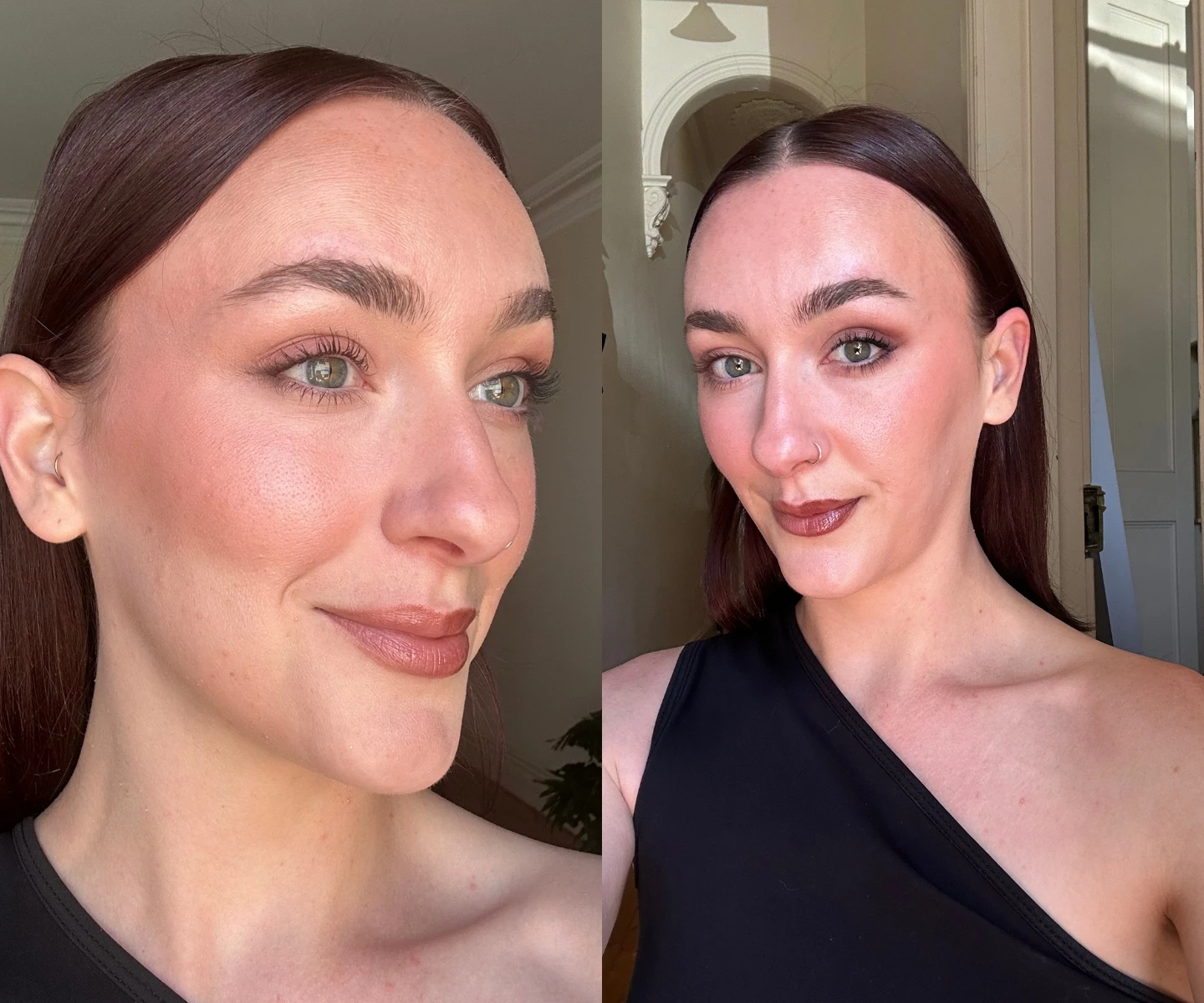
My first instinct was to gravitate toward the Medium Contrast look (left)—it’s not far from my usual style. But the High-Contrast look kept catching my eye.
It made my hazel eyes pop, and I’ve always had a soft spot for a bold lip.
That said, the difference between the two looks wasn’t as dramatic as I expected.
The High-Contrast finish felt like an “after-hours” version of my Medium-Contrast makeup. If I had the artistry (and patience) to master sultry eyeshadow every day, I’d be High Contrast all the way.
Maybe not at the farmer’s market, but definitely for the upcoming event season.
Final Verdict.
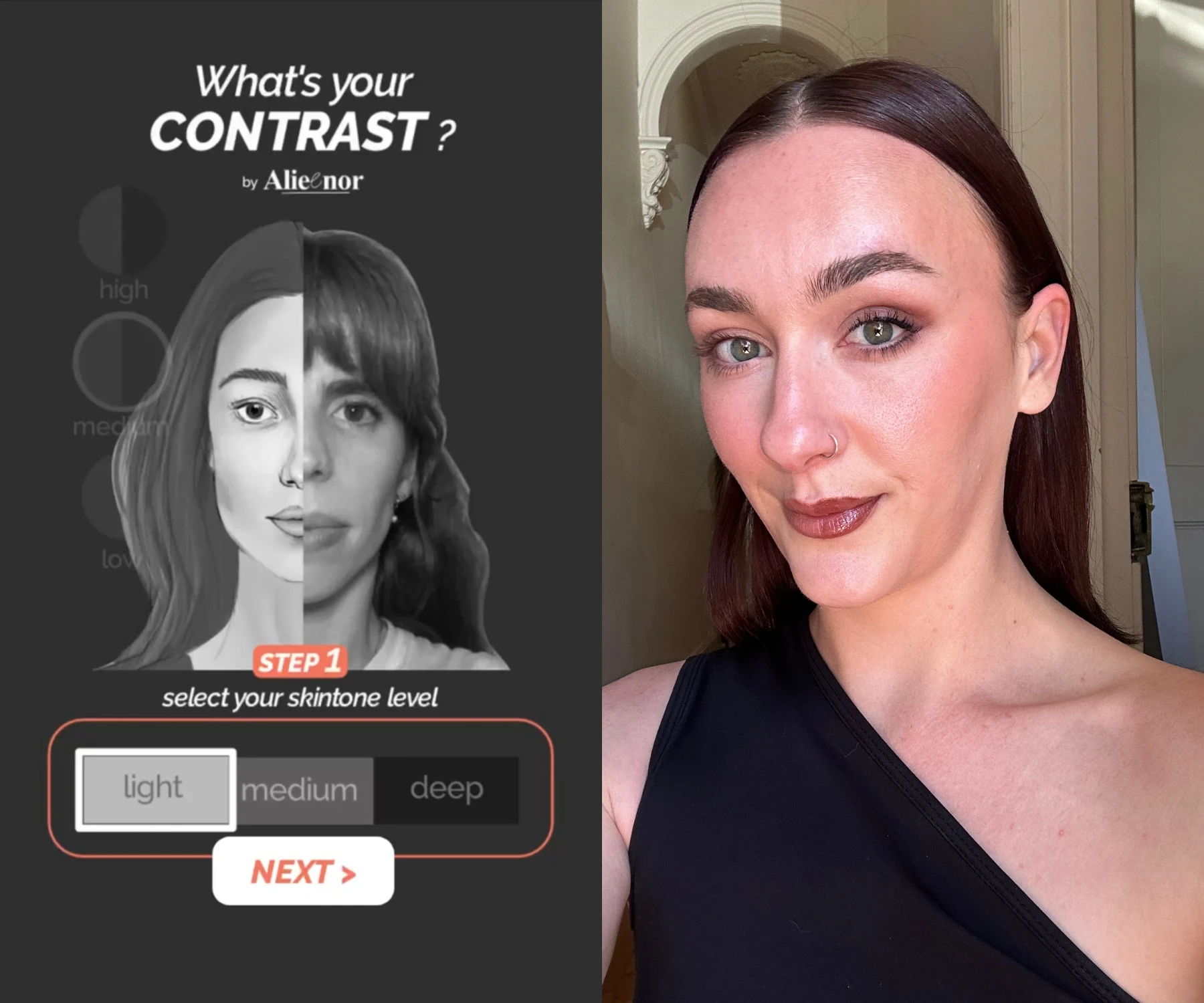
While it’s easy to dismiss trends like this as fleeting fads, the contrast makeup theory does offer something valuable: a chance to understand your features better.
Whether you fully embrace it or use it as loose inspiration, it’s another tool for your beauty toolkit.
Enjoyed this article? Here are some more we think you'll love: